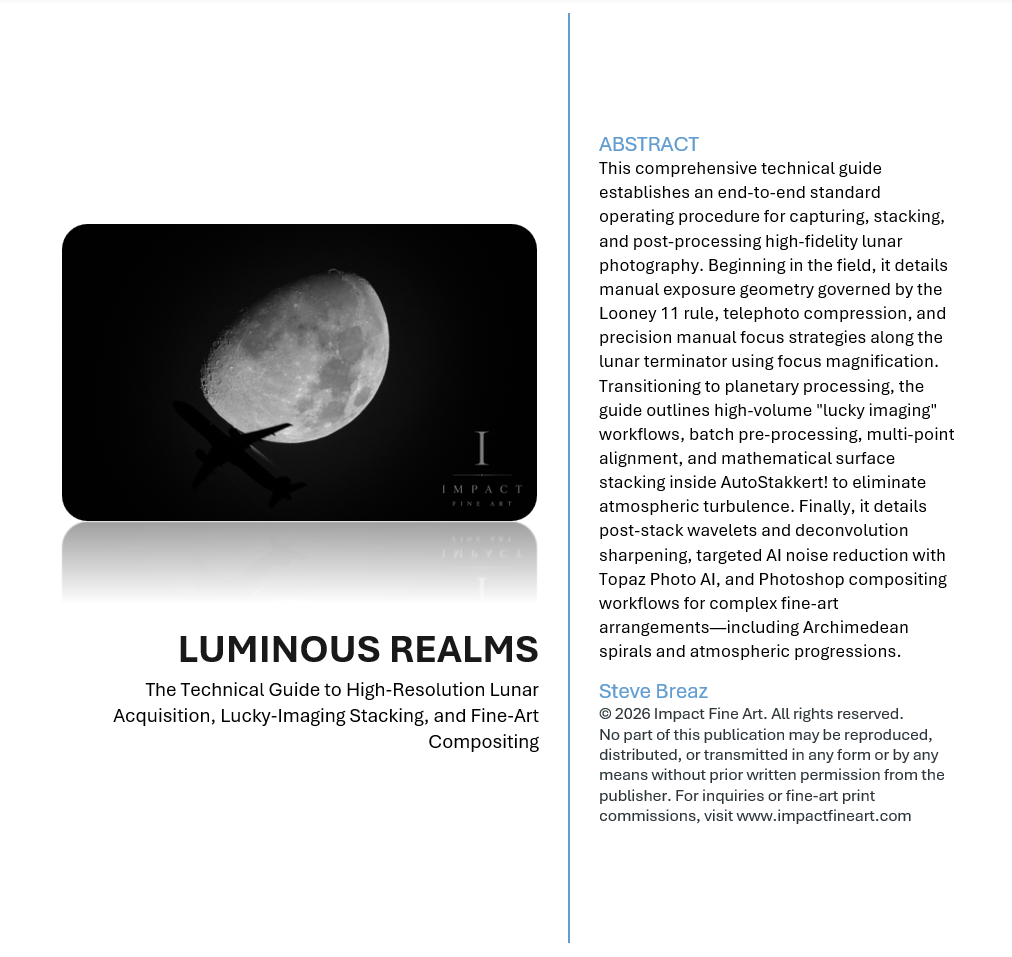
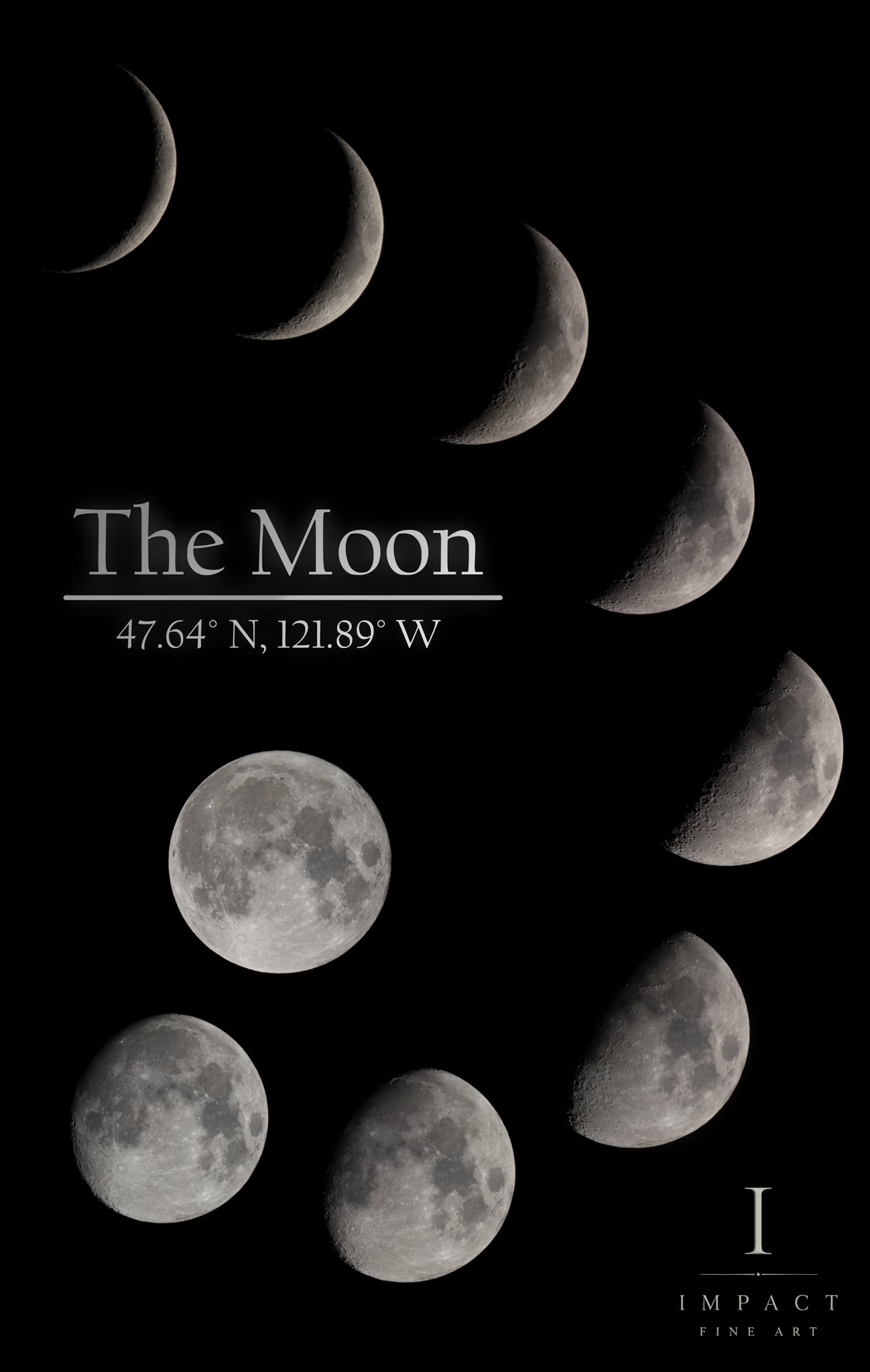
Transform standard telephoto moon shots into razor-sharp, gallery-grade lunar masterworks. Luminous Realms is a comprehensive standard operating procedure that bridges high-magnification field acquisition with advanced lucky-imaging reconstruction and multi-plate fine-art compositing.
Learn the exact mathematical and creative workflows required to overcome atmospheric turbulence, extract tactile surface micro-contrast along the terminator, and composite high-resolution lunar disks into museum-ready fine-art arrangements.
What’s Inside the Workflow
High-Magnification Field Acquisition: Master telephoto and super-telephoto exposure geometry using the Looney 11 principle. Dial in critical focus magnification on the lunar terminator and configure vibration-free shutter overrides.
Lucky Imaging & AutoStakkert! SOP: Execute planetary surface alignment and accumulation stacking to cut through atmospheric seeing, discard blurred frames, and build an exceptional Signal-to-Noise Ratio (SNR).
Frequency Deconvolution & AI Polish: Apply targeted wavelets, high-pass micro-structure pop, and controlled Topaz Photo AI refinement to enhance crater relief and maria textures without brittle halos or digital artifacts.
Fine-Art Composite Architectures: Step-by-step master layouts for large-format fine-art prints—including geometrically balanced Archimedean spirals and organic atmospheric smoke progressions.
Master File Archiving & Output: Prepare 16-bit master files and color spaces optimized for high-end acrylic face-mounts and museum cotton rag papers.
Product Specifications
Format: Instant Digital Download (Comprehensive PDF Standard Operating Procedure)
Software Covered: Adobe Lightroom Classic, AutoStakkert! (AS!3 / AS!4), Adobe Photoshop, and Topaz Photo AI
Skill Level: Intermediate to Advanced astrophotographers and fine-art printmakers
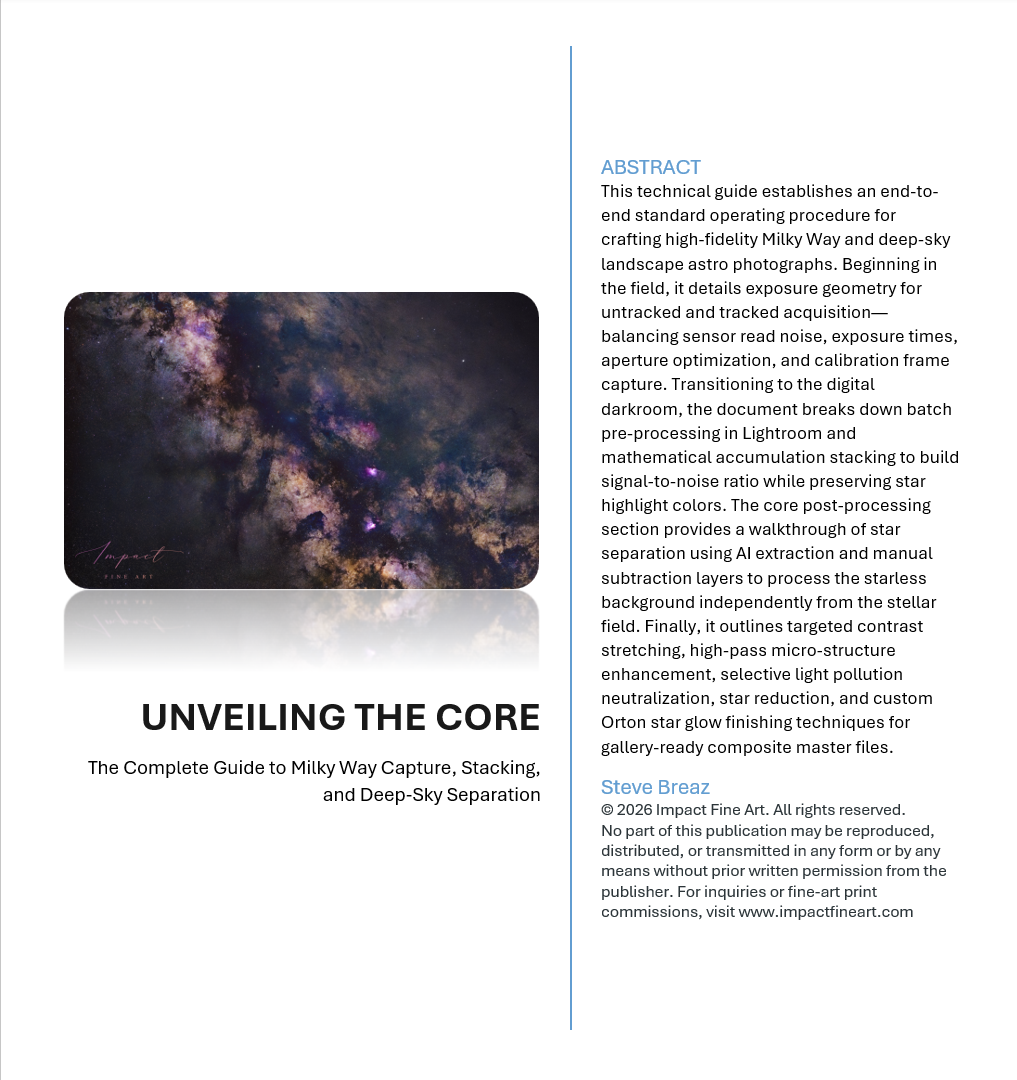
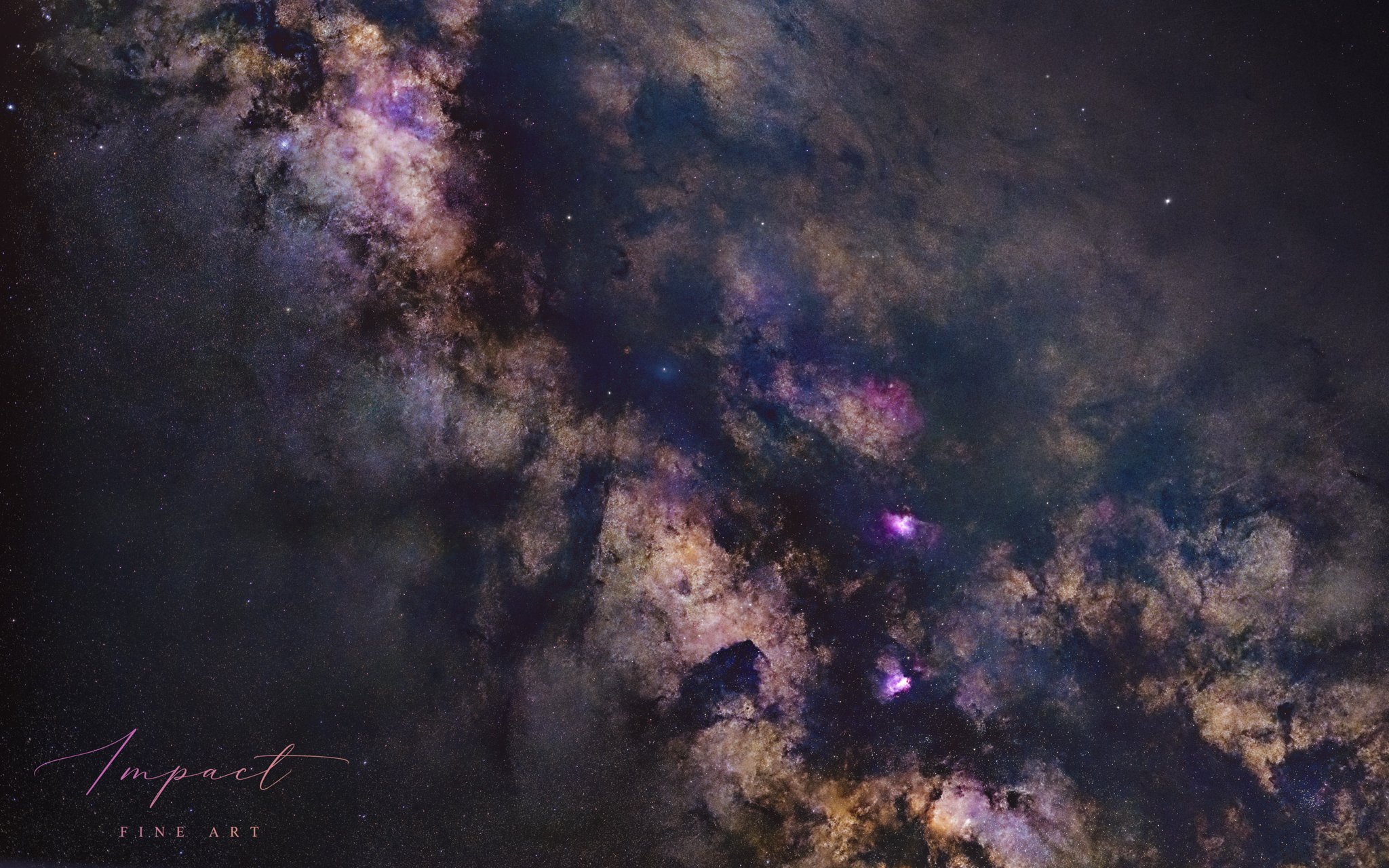
Elevate your astrophotography from standard single exposures to pristine, gallery-grade fine-art prints. Unveiling the Core is an end-to-end standard operating procedure that bridges precision field acquisition with advanced, artifact-free digital darkroom workflows.
Learn the exact mathematical and creative workflows required to separate dense stellar fields from deep-space nebulosity, unlocking unprecedented dynamic range, rich dust lane structures, and natural star colors without bloat or distortion.
What’s Inside the Workflow
Field Acquisition & Exposure Geometry: Master both untracked and equatorial-tracked capture strategies. Calculate exposure limits, optimize sensor read noise, dial in aperture sweet spots, and shoot critical calibration frames (darks, flats, and bias).
Pre-Processing & Mathematical Stacking: Batch calibrate raw data in Lightroom and execute accumulation stacking in dedicated software to maximize Signal-to-Noise Ratio (SNR) while protecting pinpoint star core highlights from clipping.
AI & Mathematical Star Separation: Step-by-step walkthroughs using AI extraction and manual subtraction layers to decouple the stellar field from background nebulosity—allowing independent manipulation of dust lanes without star interference.
Advanced Galactic Core Sculpting: Apply targeted contrast stretching, frequency-based denoising, high-pass micro-structure enhancement, and selective light pollution neutralization.
Fine-Art Finishing & Polish: Execute professional star reduction, micro-star threshold clipping, and subtle celestial Orton bloom effects for clean, museum-ready master files.
Product Specifications
Format: Instant Digital Download (Comprehensive PDF Standard Operating Procedure)
Software Covered: Adobe Lightroom Classic, Adobe Photoshop, Dedicated Stacking Engines (Sequator / Starry Landscape Stacker), and AI Separation Plugins
Skill Level: Intermediate to Advanced astrophotographers and landscape printmakers
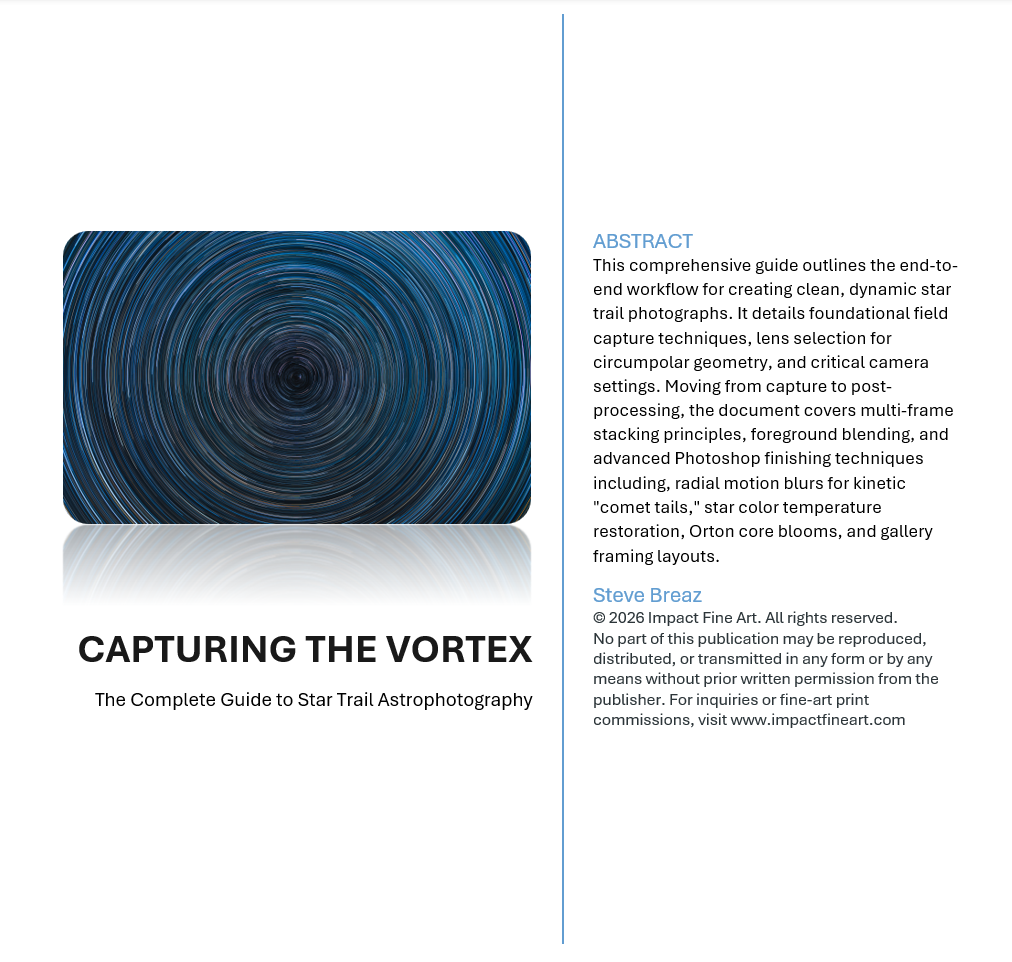
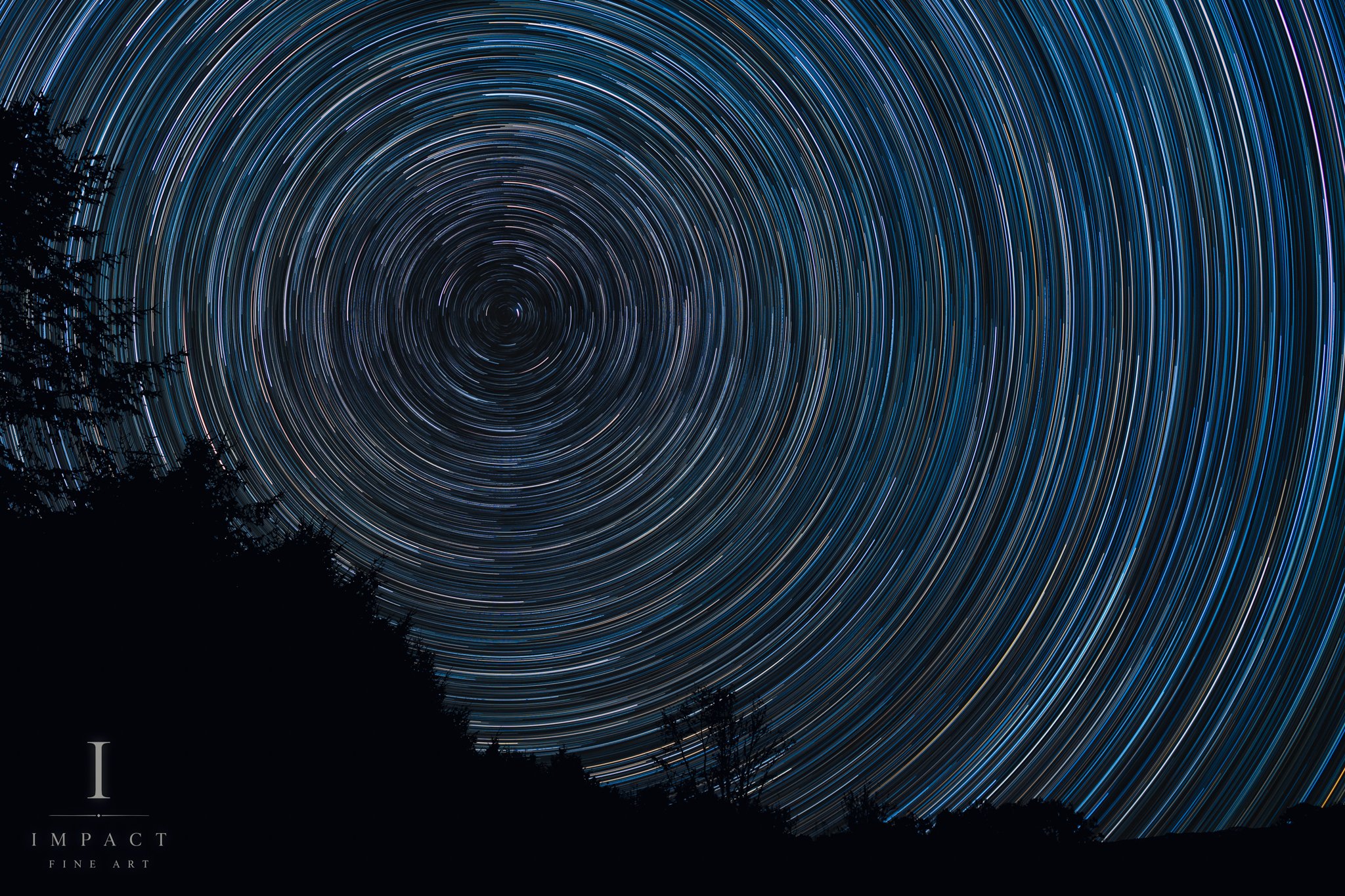
Transform static concentric rings into dynamic, gallery-grade fine-art astrophotography. Capturing the Vortex is an end-to-end standard operating procedure that bridges precision circumpolar field planning with advanced Photoshop motion-crafting workflows.
Learn the exact technical and creative systems required to execute seamless multi-hour data acquisitions, eliminate frame gaps, restore rich spectral star colors, and sculpt hypnotic, kinetic star trails ready for large-format exhibition.
What’s Inside the Workflow
Circumpolar Planning & Field Execution: Master lens selection for celestial pole geometry, polar alignment strategies, manual exposure baselines, intervalometer timing, and critical camera overrides to prevent broken trails.
Dedicated Foreground Anchoring: Capture pristine, noise-free terrestrial base plates during twilight or deep night to establish razor-sharp landscape foundations beneath the sky.
Multi-Frame Stacking Principles: Batch synchronize RAW data in Lightroom and execute multi-frame accumulation stacking in dedicated software without star bloat or digital artifacting.
Kinetic "Comet Tail" Sculpting: Step-by-step techniques using radial spin blurs and directional gradient masks to transform uniform rings into tapered, high-speed comet streaks while keeping the celestial pole needle-sharp.
Fine-Art Color & Gallery Finishing: Restore authentic stellar color temperatures (amber giants and blue dwarfs), execute subtle Orton core blooms around Polaris, and build weighted museum digital mattes with precision keyline framing.
Product Specifications
Format: Instant Digital Download (Comprehensive PDF Standard Operating Procedure)
Software Covered: Adobe Lightroom Classic, Adobe Photoshop, and Dedicated Stacking Engines (StarStaX / Sequator)
Skill Level: Beginner to Advanced nightscape photographers and fine-art printmakers
No results match your search. Try removing a few filters.
